

Opinion | The Metro Record Charlotte
CHARLOTTE: President Donald Trump’s administration says it wants an end to the war in Gaza. At the same time, reports say the administration is advancing a $2.8 billion munitions package for Israel.
That contradiction deserves more than a political talking point. It demands a clear answer: What strategy is the United States financing?
Reuters reported Sept. 15 that the administration was planning the package, citing U.S. sources. The New York Times reported the same day that the proposed transfer includes 40,000 one-ton bomb bodies: 20,000 MK-84 bodies and 20,000 BLU-117 bodies, along with 20,000 I-2000 penetrator warheads. The Washington Post was the first to report the package, according to those accounts.
The reported 40,000 figure refers to bomb bodies, not necessarily complete assembled weapons. The penetrator warheads are listed separately. The package remains a reported plan or proposed sale, not a finalized transfer confirmed here by an official congressional notification.
Even with those distinctions, the scale is substantial. And it raises a basic question for American voters, including taxpayers in Charlotte and across North Carolina: If Washington says it is pursuing peace, why is it preparing to provide weapons designed for the most destructive end of war without publicly tying that support to a credible diplomatic outcome?
The contradiction is policy, not rhetoric
Israel has the right to protect its people. Hamas’s Oct. 7 attack, its hostage-taking and its rocket attacks created an undeniable security crisis. The United States should oppose terrorism and support Israel’s legitimate security needs.
That position does not require unconditional support for every military decision made by the Israeli government.
Self-defense is not the same as an open-ended war strategy. Supporting Israel’s security does not require Washington to surrender the leverage that comes with American arms, financing and diplomatic backing. A serious U.S. policy must protect Israeli civilians while also protecting Palestinian civilians and advancing a political settlement that can make both communities safer.
Trump’s reported Gaza roadmap points toward a phased arrangement. Reporting describes terms involving a ceasefire, hostage and prisoner arrangements, a transition in Gaza governance, Hamas disarmament, international verification and a phased Israeli withdrawal. It also describes a proposed international stabilization force intended to help secure areas vacated by Israeli forces and support humanitarian and reconstruction efforts.
Those terms remain contested. Reporting indicates that disagreements center on sequencing, verification, control of weapons and the conditions for Israeli withdrawal. The roadmap should not be presented as settled policy or as an accepted agreement among all parties.
But the underlying principle is sound: Security measures and political commitments must move together. Washington cannot claim that diplomacy is its objective while treating military support as automatic and separate from the outcome.

An empty diplomatic conference room in Washington, D.C.
What taxpayer-backed support means
Foreign Military Financing, or FMF, is congressionally appropriated U.S. military assistance. It is generally provided as grants or financing that allow eligible countries to purchase U.S. defense articles and services. It is not simply Israel spending its own money.
The Congressional Research Service describes FMF as a central part of the long-term U.S.-Israel security relationship. Under the 2016 memorandum of understanding, the United States committed to seek $3.3 billion annually in FMF grants and $500 million annually for joint missile-defense programs from fiscal years 2019 through 2028, subject to congressional appropriations.
That framework does not establish that every arms transfer to Israel is paid through FMF. Nor does the available reporting establish the precise financing mechanism for every component of the reported $2.8 billion package. Some transfers move through Foreign Military Sales, while others may involve different authorities or funding streams.
When American appropriations enable a partner to obtain American weapons, the public has a right to ask what those weapons are intended to accomplish and what political strategy accompanies them.
The relevant question is not whether Israel should be denied the means to defend itself. It is whether U.S. assistance is being used to secure a durable future or to extend a war without a defined endpoint.
Security support should create leverage
The United States has influence because Israel depends heavily on American military support, weapons systems, financing and diplomatic cooperation. Influence has little value if Washington refuses to use it.
The administration should make clear that support for Israel’s security includes support for a credible peace process. That means requiring good-faith engagement with a diplomatic framework, not merely expressing support for peace while approving the tools of continued escalation.
This is not a demand that Israel accept every U.S. position. Allies can disagree. Israel’s government has its own security assessments, political pressures and obligations to its citizens. Hamas must also meet its obligations, including releasing hostages and ending attacks on civilians.
But disagreement should have consequences when one government relies on another for significant military assistance. The problem is not that Israel may challenge Washington. The problem is that Washington continues to act as though its own peace agenda carries no conditions.
Support should be conditional, not automatic.
A peace agenda needs enforceable conditions
Washington should tie additional taxpayer-financed heavy-munitions transfers to specific, public requirements.
First, the United States should demand good-faith engagement with a credible peace process. That process must address Israeli security, Palestinian political rights, hostage recovery, governance and the future status of Gaza. It cannot be reduced to an announcement without implementation mechanisms.
Second, the administration should require a clear military and political endgame. A military operation without a defined endpoint can destroy governing institutions without producing security. Washington should explain what conditions would end major combat, who would govern Gaza afterward and how that government would gain legitimacy.
Third, humanitarian access and civilian protection must be measurable. Aid should reach civilians without obstruction, and military operations should be evaluated against clear standards for avoiding civilian harm. These are not optional expressions of concern. They are necessary elements of a policy that claims to seek stability.
Fourth, hostage recovery must remain central. Hamas’s hostage-taking is a grave crime and a continuing source of danger. Any diplomatic framework must include a serious, verifiable process for securing the release of hostages and addressing the security threat posed by armed groups.
Fifth, Washington needs a workable plan for Gaza’s governance and reconstruction. A transitional administration, international monitors and a stabilization force may be part of that answer, but the details require consent, accountability and a credible path toward Palestinian self-government. Reconstruction cannot become a substitute for political rights, nor can it proceed without basic security.
Finally, Congress should exercise its oversight authority before additional heavy-munitions transfers are approved. Congress controls appropriations and can set conditions on how assistance is used. The executive branch must also follow applicable arms-transfer notification and review requirements, although federal law provides expedited and waiver authorities in some circumstances.
Those processes exist so elected representatives can examine the legal, budgetary and humanitarian consequences of decisions made in the public’s name. They should not be treated as obstacles to be avoided.

An empty congressional hearing room before proceedings begin.
Charlotte taxpayers have a stake
Foreign policy is not separate from democratic accountability. Federal funds come from taxpayers across the country, including North Carolina residents. Members of Congress representing Charlotte and the state must answer for how they approach military aid, civilian protection and oversight.
Recent reporting by WFAE showed that North Carolina Democrats split over an amendment concerning $3.3 billion in aid to Israel. Charlotte Democrat Alma Adams voted against ending the aid, while Reps. Deborah Ross and Valerie Foushee voted for the measure. That disagreement reflects a broader national debate: not a settled consensus.
Readers who follow Charlotte local politics understand that representation is measured through votes, appropriations and oversight, not only public statements. The same principle applies to foreign policy. Residents who rely on Charlotte local news should be able to see clearly how their representatives evaluate taxpayer-funded military assistance and the conditions attached to it.
That debate must remain separate from hostility toward Jewish people, Israelis or Israel’s existence. Antisemitism is unacceptable. Anti-Palestinian racism is unacceptable. Criticism of U.S. policy or the Israeli government is not, by itself, either. A serious public discussion must reject attacks on communities while examining decisions made by governments.
America can stand against Hamas and support Israel’s security. It can also insist that military support advance American interests: the recovery of hostages, protection of civilians, regional de-escalation, accountable governance and a durable peace.
If the administration wants to be judged by its promise to end the war, it must use the leverage created by American money and weapons. The United States cannot keep financing the instruments of war while treating peace as an aspiration with no conditions attached.
Sources
- Congressional Research Service: U.S. Foreign Aid to Israel: Overview and Developments Since October 7, 2023
- U.S. Department of State: U.S. Security Cooperation with Israel
- Reuters, Sept. 15, 2026: Trump administration plans $2.8 billion munitions sale to Israel, sources say
- The New York Times, Sept. 15, 2026: Report on the proposed Israel bomb package
- Reuters, Aug. 10, 2026: Trump’s Gaza plan and the relationship between Hamas disarmament and Israeli withdrawals
- WFAE, July 16, 2026: North Carolina Democrats’ vote on aid to Israel

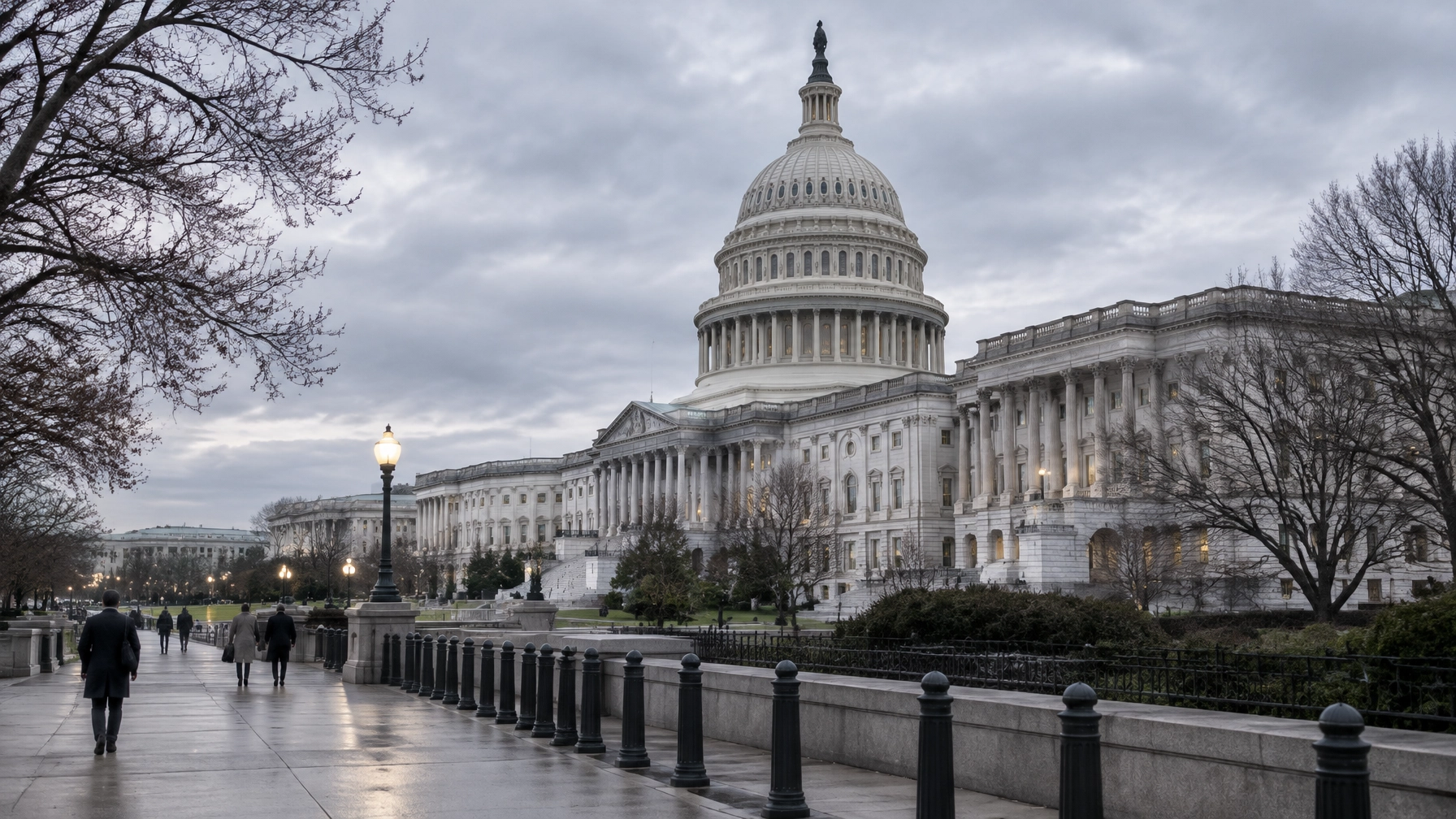
Civic buildings in Charlotte, North Carolina, at dusk.