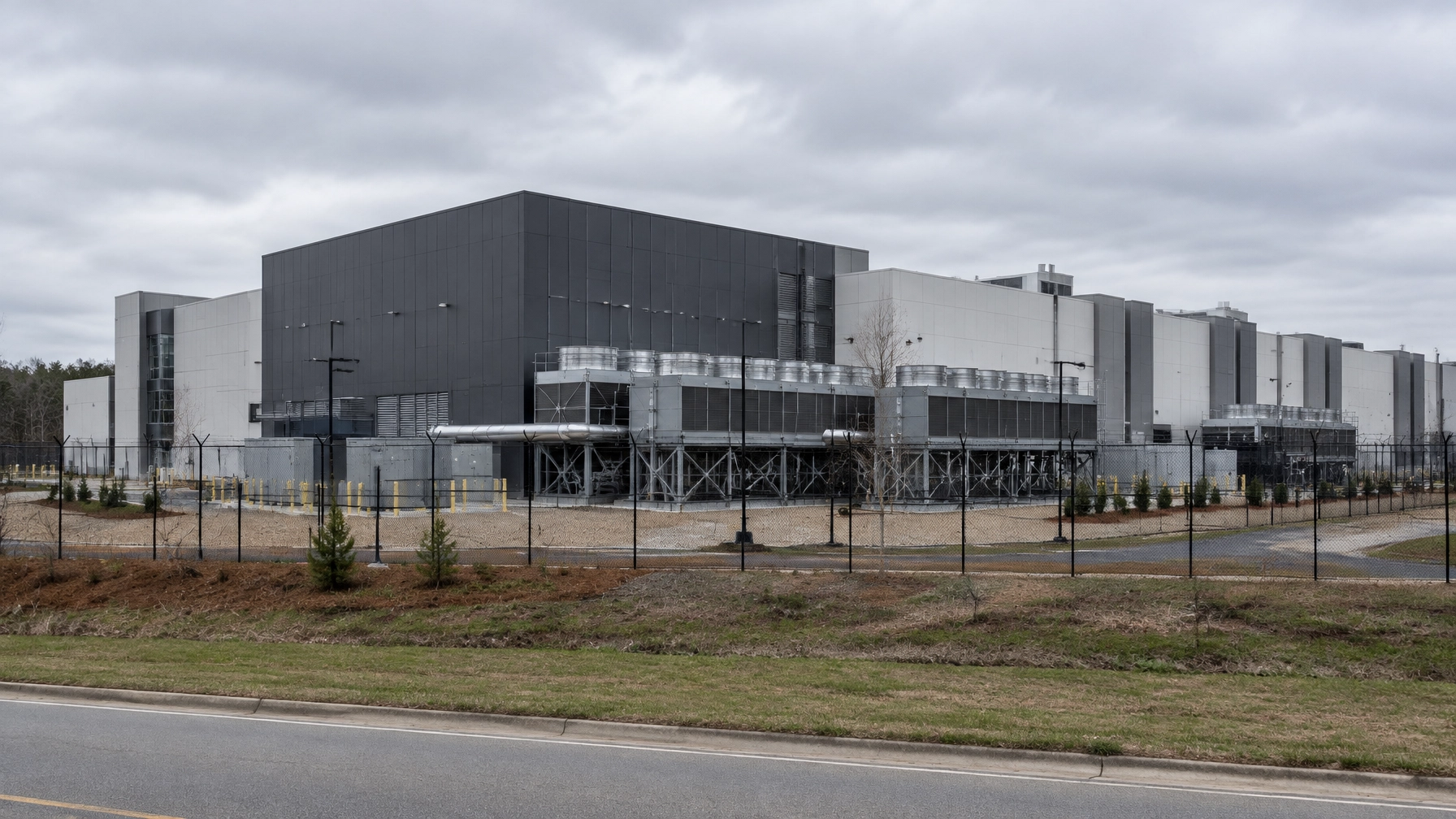
Illustration by The Metro Record.
An Oct. 12 hearing will test whether the city’s research and public engagement justify a longer moratorium—and how another pause would lead to enforceable rules.
By The Metro Record Charlotte
October 8, 2026
CHARLOTTE, N.C. — Charlotte has commissioned research, convened a community task force and gathered public feedback on data centers. But the city says it still lacks specific tools to govern their demands on water, electricity and surrounding neighborhoods.
Now, City Council is considering whether to extend its pause on new data-center applications into 2027.
A legislative public hearing is scheduled for Oct. 12. The existing moratorium remains in effect, and council has not approved an extension. The proposal under consideration would continue the pause through Oct. 11, 2027.
The immediate question is whether Charlotte needs more time. The larger one is what that time would produce: rules the city can enforce, a public accounting of its progress and protections for communities affected by future development.
Correction: The Metro Record Charlotte’s Sept. 11 article incorrectly framed the proposed extension and the timing of council action. The Transportation, Planning and Development Committee recommended an extension Sept. 8; it did not enact one. Council received an overview Sept. 14 but did not extend the moratorium. It voted Sept. 28 to schedule the Oct. 12 public hearing. The extension now under consideration would run through Oct. 11, 2027, rather than the nine-month period described in the earlier coverage.
What the pause stops—and what it does not
Council adopted the 150-day moratorium June 8. It pauses the acceptance, processing and approval of applications for new telecommunications and data-storage facilities within Charlotte and its extraterritorial jurisdiction.
It expires no later than Nov. 5, unless council extends it. It could end earlier if the city adopts new data-center regulations and policies.
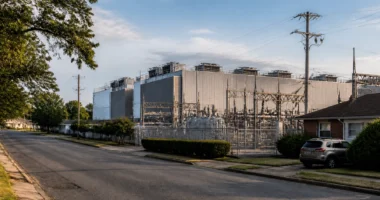
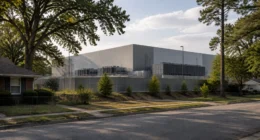
The pause does not halt all construction. Facilities approved or under construction before the moratorium began can continue, including Digital Realty’s Moores Chapel Road facility and PowerHouse’s University City project. State law also exempts certain properties and projects under G.S. 160D-107(c).
For residents watching construction near their neighborhoods, that distinction is consequential. The moratorium gives Charlotte time to reconsider the rules for future applications. It does not reverse approvals already granted.
Extending it would preserve that distinction. What remains in question is whether the city has made enough progress—and identified enough unfinished work—to justify a longer hold on new applications.

Illustration by The Metro Record.
What Charlotte has accomplished
The city’s legislative record identifies three efforts as evidence of progress during the original moratorium.
Charlotte engaged the World Resources Institute to produce a Data Centers Impacts Report, drawing on national research and examples from other jurisdictions. It convened a 19-member Data Center Community Task Force of technical experts and community leaders. And it began a public-engagement program that included an education campaign, a survey and in-person and virtual meetings.
Those efforts have produced research and preliminary recommendations. They have also clarified the limits of the city’s existing framework.
The legislative record identifies two findings in support of an extension: Data-center impacts are complex and vary by facility, and Charlotte lacks specific regulatory tools, including capacity verification, monitoring protocols and cooling standards.
That is the central argument for more time. The city says it does not yet have the instruments needed to govern the development it has paused.
But identifying those gaps is not the same as closing them. Council’s decision will turn in part on whether an extension offers a credible path from research to rules.
Why the existing rules may not be enough
Charlotte’s Unified Development Ordinance classifies data centers as “telecommunications and data storage” facilities. The definition covers facilities housing computer systems and associated equipment, including cloud-storage systems and server farms.
They are permitted by right in eight zoning districts: General Commercial, Regional Commercial, Office Flex Campus, Research Campus, Manufacturing & Logistics ML-1 and ML-2, Innovation Mixed Use and Uptown Core.
Under the current ordinance, data centers are treated alike regardless of their size, type or capacity. They must meet general development requirements governing setbacks, height, landscaping, screening and exterior lighting, but face no additional prescribed conditions specific to data centers.
A small facility and a hyperscale campus therefore fall under the same basic zoning framework, even though their demands may differ substantially.
Charlotte also faces a constraint on changing that framework. Session Law 2024-57, known as Senate Bill 382, limits local governments’ ability to down-zone property without the written consent of all affected owners.
That restriction narrows the city’s options. It does not, by itself, settle which lawful standards Charlotte could adopt for water use, energy demand, noise, air quality or other community impacts.
The work ahead is to identify those options and determine how they would be applied and enforced.
What the task force wants changed
The task force has recommended a twelve-month extension for further research and policy development. Its recommendations are preliminary, not adopted city policy, and its proposed duration is distinct from the Oct. 11, 2027, end date now under council consideration.
Its proposals address several of the gaps identified in the city’s review:
- Verification of grid and water capacity before rezoning, with Charlotte Water involved earlier in development review.
- Closed-loop cooling or reclaimed water where possible.
- Stronger noise and vibration standards, along with air-quality monitoring.
- Reporting on water and energy use.
- Environmental-justice considerations in siting and review.
- Incentives or requirements for renewable energy.
These proposals give the extension a potential agenda. They do not yet establish which measures the city would adopt, which projects they would cover or how compliance would be measured.
Task force members have also publicly sought greater transparency, additional information and more support from city leaders as they develop recommendations.
Those concerns raise a separate accountability issue. An advisory group cannot fully evaluate impacts without access to the relevant evidence. Residents asked to weigh future development face the same problem.

Illustration by The Metro Record.
Whose concerns will shape the rules?
For Black and minority communities, the issue is not a claim that a particular facility will be built in a particular neighborhood. The record does not establish that.
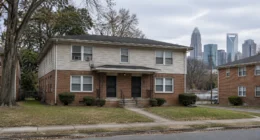
The concern is whether familiar patterns of land use and unequal political influence could leave communities with less power carrying more of the noise, air-quality, traffic and infrastructure burdens associated with large industrial facilities.
Technical standards would address part of that concern. Public participation would address another.
The review must establish not only how much water or electricity a facility requires, but also how affected residents can examine the evidence, challenge incomplete information and influence decisions before approvals are granted.
An extension could create time for that work. Whether it does so meaningfully will depend on who participates, what information is available and how the city incorporates testimony into its final policies.
What another extension would have to deliver
The city’s legislative record says state law requires an extension to be supported by evidence of good-faith efforts toward the original moratorium’s goals, along with new facts and conditions warranting additional time.
Charlotte has identified its research, task force and engagement work as evidence of those efforts. The next test is whether council attaches a sufficiently clear plan to the time it grants.
Three questions will determine whether an extension becomes a period of policy development or simply postpones the decision:
What must be completed?
The city needs to identify the standards it intends to develop, the schedule for producing them and whether any interim requirements would apply before final regulations are adopted.
What will the public be able to see?
Residents need to know how progress will be reported, whether the task force’s recommendations will be published in full and what evidence will support the proposed rules.
Who will influence the outcome?
Council needs to clarify the task force’s continuing role and how residents’ testimony will shape the policies that follow.
Council may approve the proposed extension, select a different duration or decline to extend the pause. Whatever period it chooses, the end date alone will not explain what Charlotte intends to accomplish.
The next decision
The Oct. 12 hearing will give residents an opportunity to speak on the record before council acts on the proposed extension.
It will not resolve every question about data centers. It will help determine whether Charlotte gets more time to answer them—and whether that time comes with a defined path to enforceable policy.
The distinction matters. A longer pause would delay new applications. Clear rules would determine how the city handles them when the pause ends.
The Metro Record Charlotte will report on the hearing’s outcome and the commitments council makes.
Attend or watch
- Public hearing: Oct. 12, 2026, at 6:30 p.m.
- Location: Charlotte-Mecklenburg Government Center, 600 East Fourth St.
- Livestream: Available through the city’s government channels.
- Current expiration: No later than Nov. 5, 2026.
- Proposed extended expiration: Oct. 11, 2027, subject to council approval.