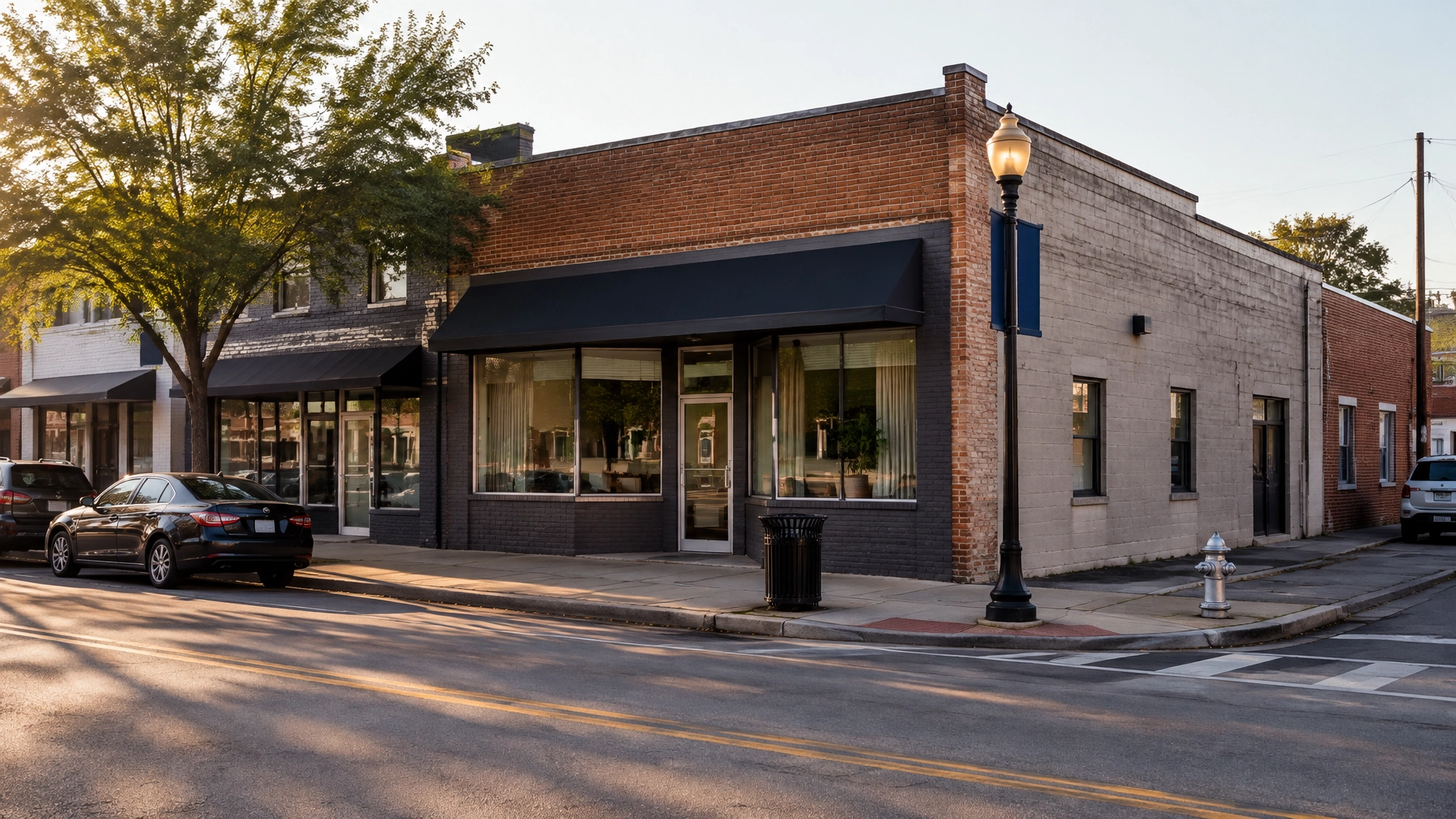

Illustration generated for The Metro Record; no identifiable people depicted.
If you have not heard of The Metro Record Charlotte, this is a good place to start.
We are a new local publication covering the people, decisions, institutions and ideas shaping life in Charlotte.
I started The Metro Record because too much of what affects people here is treated as background noise. A zoning decision can change who can afford to stay in a neighborhood. A school board vote can shape a child’s daily life. A contract can determine which businesses grow and which ones are passed over. A policy written in a government office can reach a kitchen table, a classroom or a front porch before most residents have had a chance to understand it.
That is the through-line of our work: how policy, money and power land on everyday people in Charlotte.
We are here for Charlotte-area residents who care about what happens in their communities. That includes people who follow local government closely, people who want to understand how public decisions are made, and people who simply want reliable information about the places where they live.
It includes communities that have too often been underserved by larger outlets, particularly Black and minority communities across the city.
Our coverage will include local news, opinion, guest commentary and deeper reporting on the issues that affect people who live here. We will cover civic engagement and political participation. We will pay attention to Black-owned and minority-owned businesses. We will examine community development and displacement, local arts and culture, and the institutions that make decisions for the city.
Those are not separate lanes. They overlap.
A development story is also a story about ownership, housing and who gets to remain in a neighborhood. A business story can be about access to capital, public contracts and whether economic growth reaches the people already doing the work. A cultural story can show what a community values and what it is trying to preserve. An election story is also a story about whether residents feel heard before, during and after voting.
That is the kind of Charlotte community news we intend to produce: reporting that connects public choices to private consequences.

Illustration generated for The Metro Record; no identifiable people depicted.
I also want to be plain about what we are not.
We are new. We are small. We are not going to pretend to cover everything happening in a growing city. We will have to make choices about where to put our time, and some stories will take longer than others.
We are also not going to pretend to be neutral about the value of the communities we serve. Black neighborhoods, immigrant communities, working-class residents and minority-owned businesses should not have to prove their importance before receiving serious coverage.
That does not mean we are here to tell readers what to think. It means we are here to keep asking who benefits, who pays and who gets left out of the conversation.
Charlotte does not lack activity. There are meetings, announcements, proposals, campaigns, openings, closings and public arguments every week. The challenge is following what happens after the first announcement, after the vote and after the cameras leave.
When local coverage thins out, stories are more likely to appear in bursts and then disappear. Residents may hear about a major proposal without seeing how it changes over time. A neighborhood may receive attention only when conflict becomes visible. Institutions may face less sustained questioning simply because fewer reporters have the time to keep following the record.
That is not a criticism of individual journalists working under difficult conditions. It is a consequence of a local news system with less capacity than the city requires.
A city needs reporting that stays with an issue. It needs people who read the documents, attend the meetings, return the calls and ask what happened next. It needs room for residents to speak about their own communities without being reduced to a quote or a reaction.
The Metro Record is here to be useful, not loud.
That means giving readers information they can use, context they can understand and questions that deserve more attention. It means making room for disagreement without treating every disagreement as a spectacle. It means distinguishing what is known from what is still being investigated or awaited.

Illustration generated for The Metro Record; no identifiable people depicted.
We are new enough that we will make mistakes. When we do, we intend to correct them.
We will also need readers to tell us what we are missing. There are people, neighborhoods, businesses, meetings and concerns that should be on our radar and may not be yet. We would rather be corrected than be wrong, and we would rather hear a difficult question early than overlook it entirely.
If you have information, a correction, a story idea or a perspective that deserves consideration, reach us through the contact page on metrorecordclt.com. That invitation is genuine. It is part of how this publication should work.
Charlotte is changing quickly. The decisions being made now will shape who can build a life here, who can remain here and who has a voice in what comes next.
I am glad to begin this work, and I hope The Metro Record becomes useful to you.
- JR Byrd
Founder and Editor, The Metro Record Charlotte