By The Metro Record Charlotte
Published September 4, 2026
**THOMASBORO-HOSKINS : ** A grocery store promised for one of west Charlotte’s most underserved neighborhoods remains unopened after Carolina Farm Trust raised slightly more than $12 million, most of it from public sources.
Charlotte awarded the nonprofit $1.5 million in federal COVID-19 relief funds. Mecklenburg County provided another $6.7 million from the same federal allocation. The money was intended to support a food distribution center and grocery operation on South Hoskins Road.
Four years after the project was announced, Carolina Farm Trust has closed its farm stand, laid off staff, subleased its renovated kitchen and ceased most operations. The nonprofit is still trying to raise enough money to restart.
The county has commissioned a third-party audit of the organization’s South Hoskins Road operations. Mecklenburg County commissioners are expected to review the audit results in closed session on Oct. 27.
The immediate question is whether Carolina Farm Trust can still deliver the grocery store it presented to residents and public officials. The larger question is how public funding was structured, monitored and released for a project whose central service remains unfinished.
The project was presented as a food-access solution
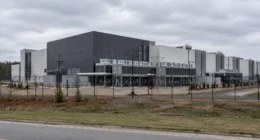
Carolina Farm Trust planned to convert an old warehouse into a local food distribution center and full-service grocery store. The project was also promoted as a way to connect regional farmers with residential and commercial customers while bringing fresh food to Thomasboro-Hoskins.
Most of the more than $12 million raised by CEO Zack Wyatt went toward warehouse renovations and equipment, according to WFAE’s Sept. 2 report.
The site received a renovated commercial kitchen. Carolina Farm Trust also opened a farm stand where residents could purchase produce. But the stand operated only four hours a week and did not become a substitute for a neighborhood grocery store.
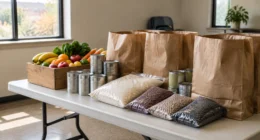
The nonprofit has since subleased the kitchen to a catering company. It also donated older refrigerators to A Brighter Day Ministries, a nearby food pantry. That equipment has helped the pantry, but it does not replace the grocery operation that public funding was intended to support.

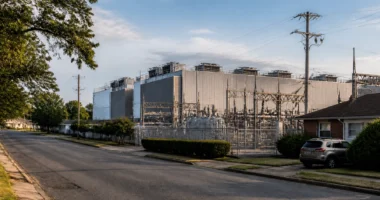
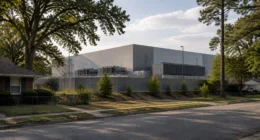
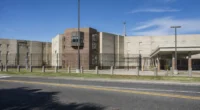
The proposed food hub was planned for a warehouse on South Hoskins Road.
The grocery store was moved to a later phase
Carolina Farm Trust has said the grocery store was always part of a second phase that would require additional funding. Wyatt told WFAE that the store would need approximately another $8 million to build and open.
That explanation accounts for the store’s absence from the first stage of the project. It does not resolve why the organization’s initial operations have now largely stopped, or why a project that already received substantial public support has not secured a clear path to completion.
The nonprofit launched a GoFundMe campaign nearly 10 months ago to help fund the next phase. As of WFAE’s reporting, the campaign had raised about $4,000.
Wyatt told WFAE, “The responsibility ends with me,” while acknowledging that Carolina Farm Trust had not managed or rolled out the farm stand effectively. He also said the grocery store could open within eight months if it received the necessary funding.
Carolina Farm Trust’s position is that the grocery store remains a viable later-stage project, not a completed obligation under the original funding. The organization has also pointed to financial difficulties, including the loss of $2.5 million following federal budget cuts in 2025.
Those explanations leave public officials and residents to evaluate the difference between a project that is delayed and one that has effectively stalled.
Residents are still relying on stopgap systems
Thomasboro-Hoskins has a longstanding shortage of full-service grocery options. Only about 3% of homes in the neighborhood are within a half-mile of a full-service chain grocery store, according to WFAE’s reporting.
Residents often rely on convenience stores, a local tienda, food pantries or public transportation to obtain groceries. Convenience stores may provide basic packaged food, but they generally do not offer the range of affordable fresh produce, meat and dairy products available at a full-service market.
For seniors and residents without cars, a trip to the grocery store can require a bus ride and additional time carrying food home.

Residents in Thomasboro-Hoskins often rely on buses, convenience stores and food pantries for groceries.
A Brighter Day Ministries illustrates both the need and the uneven distribution of resources in the neighborhood. The organization operates a food pantry less than half a mile from the Carolina Farm Trust site and serves more than 80 people daily, according to WFAE.
It does so on a budget of less than $1 million, far below the public funding directed to the Carolina Farm Trust project.
Founder Beverly Knox Davis has described a line that once wrapped around the block. The pantry provides food to residents who would otherwise face limited choices, including seniors who may not be able to travel easily to a distant supermarket.
Davis has also said that the community still needs the grocery store Carolina Farm Trust promised. Her concerns are not limited to the organization’s failure to complete the store. WFAE reported that residents questioned the farm stand’s limited hours, food quality and prices.
A small pantry operating on limited resources is meeting an immediate need. It cannot, however, provide the stable retail access, product range and local economic activity expected from a full-service grocery store.
County officials have questioned whether the project served the neighborhood
Mecklenburg County commissioners questioned Wyatt about the project in November. Commissioner Arthur Griffin said the distribution center appeared to support “everybody else except the people in Hoskins,” according to WFAE.
In a letter to U.S. Rep. Alma Adams, commissioners said they were no longer confident Carolina Farm Trust could deliver on its promises. They cited staff layoffs, high prices and limited evidence that the project benefited Thomasboro-Hoskins residents or Mecklenburg County farmers.
The county had submitted a $4 million proposal to the federal government on Wyatt’s behalf. The request was approved for $850,000.
Commissioners subsequently asked that the funding be pulled and launched a third-party audit of Carolina Farm Trust’s operations at the South Hoskins Road site. County representatives told WFAE they did not know that the farm stand had closed or that the kitchen had been leased.
The audit should clarify how the project used its funding, what remains operational at the warehouse and whether the current facility can support the nonprofit’s stated plans. Commissioners are scheduled to review the results Oct. 27. It is not yet clear what information will be made public after that review.
The audit also raises a basic accountability issue: Public grants can support construction, equipment and early-stage development, but residents need measurable services in return. In this case, the promised grocery store has not opened, the farm stand is closed and the nonprofit has suspended most operations.
Three Sisters Market is a separate project
The stalled Carolina Farm Trust project should not be confused with Three Sisters Market on West Boulevard.
Three Sisters Market is a separate, community-owned cooperative effort led by the West Boulevard Neighborhood Coalition. It is planned for the West Boulevard and Clanton Road area, not Thomasboro-Hoskins. The projects have different organizers, ownership structures, sites and fundraising models.
According to the UNC Charlotte Urban Institute’s April 9 report, Three Sisters Market had raised nearly $9 million toward an estimated $15 million needed for construction and initial operations. Its plans include a grocery store, community room, teaching kitchen and co-working space.
The cooperative has also developed a membership structure intended to give West Boulevard residents a role in governance. Nearly 600 people had purchased memberships by April.
Three Sisters Market faces its own financing and construction challenges. But it is not the Carolina Farm Trust project, and its fundraising progress should not be used to suggest that the South Hoskins Road grocery store is moving forward.
The distinction matters because Charlotte’s grocery shortage is not a single-project problem. Multiple neighborhoods lack reliable access to fresh food, and different community groups are pursuing different solutions.
The unresolved issue is delivery
Carolina Farm Trust’s explanation: that the grocery store belonged to a later phase requiring another $8 million: may describe the project’s internal plan. It does not answer whether the initial public investment produced the community benefit residents were promised.
A warehouse renovation and commercial kitchen can be useful assets. So can donated refrigerators and a temporary farm stand. But those outcomes are different from opening a full-service grocery store in a neighborhood where only a small share of homes is close to one.
The Thomasboro-Hoskins community continues to depend on food pantries, convenience stores and buses. A Brighter Day Ministries continues to fill gaps with a fraction of the resources awarded to the larger project.
The county audit and the commissioners’ October review should establish what happened to the project’s money, what remains usable at the South Hoskins Road facility and whether Carolina Farm Trust has a credible, funded plan to complete the store.
Until then, the central fact remains unchanged: West Charlotte received a major public investment intended to improve food access, but Thomasboro-Hoskins still does not have the grocery store it was promised.