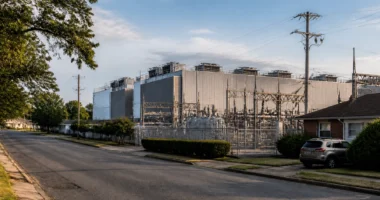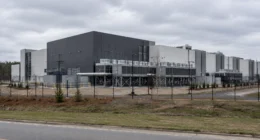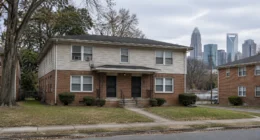
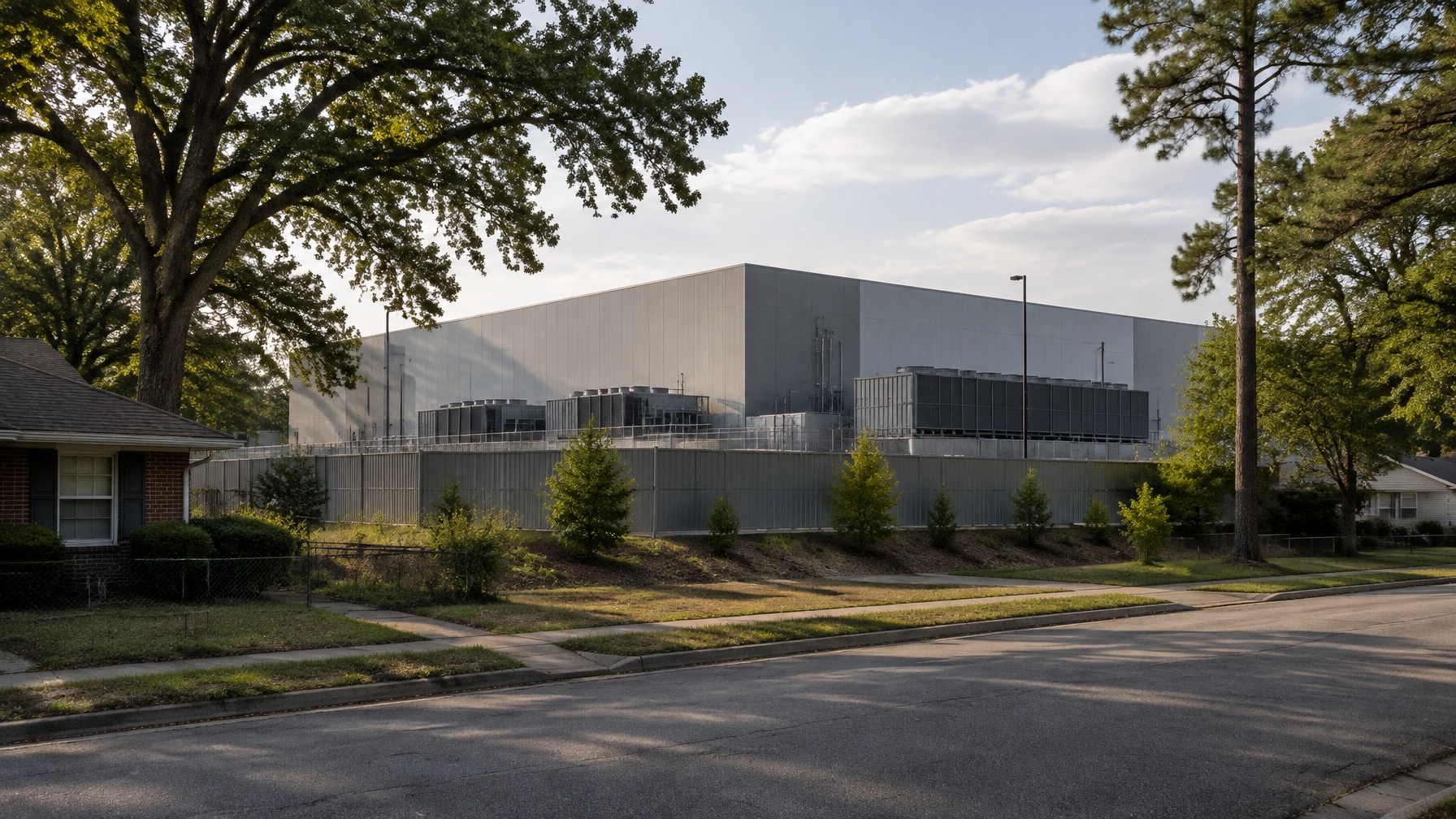
Illustration generated for The Metro Record. No identifiable people, logos, signage or text depicted.
Charlotte, N.C. — Charlotte City Council is preparing to consider an extension of the city’s temporary data center moratorium through Oct. 11, 2027. The proposed extension would give the city roughly 11 additional months to develop rules for facilities that are currently allowed by right in several zoning districts.
The city says it needs that time because it does not yet have specific tools for verifying utility capacity, monitoring impacts or setting cooling standards. The central question before the Oct. 12 public hearing is whether the additional time will produce enforceable regulations, or another set of studies and recommendations without a published list of rules to follow.
Correction to the Sept. 11 report
Metro Record reported on Sept. 11 that City Council was scheduled to vote Sept. 14 on extending the moratorium. That implied a decision was imminent. It was not.
On Sept. 14, Council received an overview of the recommended extension but did not act because state law required a public hearing first. On Sept. 28, Council voted to set that hearing for Oct. 12, 2026.
Metro Record is correcting the sequence. The Sept. 11 article should have said Council would first receive the extension for review, and that a public hearing and a separate vote would follow.
The existing moratorium remains in effect until no later than Nov. 5, 2026, unless Council approves new regulations sooner. The Oct. 12 meeting is a public hearing on the proposed extension, not proof that the extension has been adopted.
What the moratorium does
Council adopted a 150-day temporary moratorium on June 8. It pauses the acceptance, processing and approval of applications for new telecommunications and data storage facilities in Charlotte and its extraterritorial jurisdiction.
The moratorium was adopted under N.C. General Statute 160D-107. The law requires a local government to identify the problem requiring the pause, specify which approvals are covered, set a termination date and explain why that duration is reasonably necessary. The city must also describe the actions it will take during the moratorium.
An extension requires more than a request for additional time. The city must show good-faith efforts toward the original moratorium’s goals and identify new facts and conditions warranting the extension.
Charlotte’s legislative file identifies three efforts: the city engaged the World Resources Institute, convened a 19-member Data Center Community Task Force and launched a community engagement plan that includes an education campaign, a survey and in-person and virtual meetings.
The city says WRI’s Data Centers Impacts Report compiles national research and examples from other jurisdictions. It also says WRI found that data center impacts are not uniform and are complex.
The city’s file further states that staff and task force members acknowledged Charlotte lacks specific regulatory tools, including capacity verification, monitoring protocols and cooling standards. More technical research is needed before those tools can be written and applied.

Illustration generated for The Metro Record. No identifiable people, logos, signage or text depicted.
That is the strongest concrete justification for an extension: Charlotte is trying to regulate a type of industrial development that its current code does not distinguish by size, type or capacity.
But 11 months is a substantial period. The city has named a report, a task force and a survey. It has not published a specific list of ordinances, standards or monitoring requirements that will exist by October 2027 and do not exist now.
That is the gap the Council and the public should examine.
The rules Charlotte has now
The Unified Development Ordinance defines a data center as a telecommunications and data storage facility accessed only by employees and housing computer systems and related components.
Data centers are permitted by right in the following zoning districts:
- General Commercial, or CG
- Regional Commercial, or CR
- Office Flex Campus, or OFC
- Research Campus, or RC
- Manufacturing & Logistics, or ML-1 and ML-2
- Innovation Mixed Use, or IMU
- Uptown Core, or UC
“Permitted by right” means a project does not require a rezoning or a discretionary Council vote if it meets the applicable requirements.
Currently, all data centers are treated the same under the UDO, regardless of size, type or capacity. They must follow ordinary zoning and development standards involving setbacks, height, landscaping, screening and exterior lighting. They do not face additional prescribed conditions specific to data centers.
A small facility and a hyperscale campus therefore face the same basic review today.
The proposed extension is intended to give Charlotte time to change that system. It is also why the moratorium and the rules that follow it carry so much weight. When a use is permitted by right, residents do not receive a discretionary public hearing at which they can object to the project before Council.
The city also cited a separate state constraint in May. Session Law 2024-57, commonly identified as SB 382, limits local governments’ ability to down-zone property without the written consent of all affected property owners. Charlotte has raised that law as a reason it cannot simply tighten land-use rules on its own.
That is a structural limit the city says it must work within. It is not a legal conclusion reached by Metro Record.
North Carolina law also exempts certain property and projects from a moratorium under N.C. General Statute 160D-107(c). The city has acknowledged that it cannot enforce the pause against exempt projects.
What the pause does not stop
Digital Realty’s facility on Moores Chapel Road and PowerHouse’s University City project were already approved or under construction when the moratorium began. Both can continue.
PowerHouse’s University City facility plans to use about 1.2 million gallons of reclaimed water daily. Digital Realty’s Moores Chapel site is reported at about 35,000 gallons daily. The difference reflects facility size and cooling design, not a universal industry standard.
Digital Realty’s proposed Moores Chapel campus also includes a new Duke Energy substation.
The practical result is direct: residents who expected a pause on data center activity may still see construction near them. The moratorium governs future applications, not projects that were already approved or otherwise exempt.
The water figures also raise questions beyond direct consumption. Residents and advocates have asked how Charlotte will measure water use during drought conditions and whether the indirect water demand associated with electricity generation will be counted.
The city has not yet published a final system answering those questions. Nor has it published how grid and utility upgrade costs will be assigned between developers, public agencies and other ratepayers.

Illustration generated for The Metro Record. No identifiable people, logos, signage or text depicted.
What residents have said, and what remains unknown
As of Sept. 2, 233 people had responded to the city’s community survey. Among those respondents, 78% said they were opposed or strongly opposed to data centers. Seventeen percent said they were in favor or strongly in favor, while 5% were neutral, unsure or did not answer.
Those figures describe survey respondents. They are not a scientific poll and should not be generalized to Charlotte as a whole.
The city has not said whether it will repeat the survey or publish an updated count ahead of the Oct. 12 hearing.
The city has not published the full survey instrument, the response window or whether the results were weighted. Those are open questions, especially as the city prepares to use public engagement as part of its justification for extending the moratorium.
Residents and advocates have raised concerns about the pattern of land-use decisions and the risk of disproportionate impacts on Black, minority and lower-income communities. That concern should be reported as a concern. The available record does not establish that future data centers will be located in Black or lower-income neighborhoods, and it does not establish that property values have fallen because of data centers.
The issue is part of a larger Charlotte urban development question: how much influence do residents have over industrial projects that are approved by right, and how are costs and benefits distributed among communities?
Timeline
- April 27, 2026: Council directs staff to report on data centers.
- May 11, 2026: Staff presents an inventory and potential impacts. The city cites SB 382 limits on down-zoning.
- May 26, 2026: Council holds a public hearing on the proposed moratorium.
- June 8, 2026: Council adopts a 150-day moratorium.
- Sept. 8, 2026: The Transportation, Planning and Development Committee unanimously recommends an extension among members present: Driggs, Johnson and Mayfield.
- Sept. 14, 2026: Council receives an overview of the proposed extension. No vote occurs.
- Sept. 28, 2026: Council sets an Oct. 12 public hearing.
- Oct. 12, 2026: Public hearing on the proposed extension.
- Nov. 5, 2026: The existing moratorium expires unless extended, or unless new regulations are approved sooner.
- Oct. 11, 2027: Proposed end date of the extension.
What Metro Record is asking
- What specific rules will exist by October 2027 that do not exist now?
- Will the city publish the Data Center Impacts Report, the task force’s full recommendations and the survey instrument and results?
- How will capacity verification and cooling standards be written, and who will verify them?
- Will water use be measured in drought conditions, and will indirect water demand from electricity generation be counted?
- Will developers cover grid and utility upgrade costs in full, or will those costs reach other ratepayers?
- Will local hiring and minority- and Black-owned business procurement be enforceable conditions or informal expectations?
- How will residents near existing and proposed sites have a voice, given that data centers are approved by right rather than by discretionary vote?
- What happens on Nov. 6, 2026, if the Oct. 12 hearing does not produce an extension?
Metro Record has requested responses from the city on the deliverables list, the survey methodology and the next steps after Oct. 12. Those responses remain pending, and this article will be updated if the city provides them.
The Metro Record Charlotte is a new publication. Following a moratorium from one vote to the next is the kind of Charlotte local news and Charlotte local politics coverage the publication intends to keep doing, particularly when decisions about growth place public resources and neighborhood protections under review.
The Oct. 12 hearing will not resolve every question about data centers. It will show whether the city can explain, with specificity, what another 11 months is expected to produce.
Sources
- City of Charlotte legislative file for the Oct. 12 public hearing
- City of Charlotte Data Centers Moratorium FAQs
- City of Charlotte data center engagement opportunities
- Charlotte Business Journal report on the proposed extension through October 2027
- WFAE report on the midpoint of Charlotte’s moratorium
- Metro Record Charlotte’s Sept. 11 report