By JR Byrd
Sept. 23, 2026
CHARLOTTE, N.C. Leon Timbo has never sounded interested in choosing only one musical language.
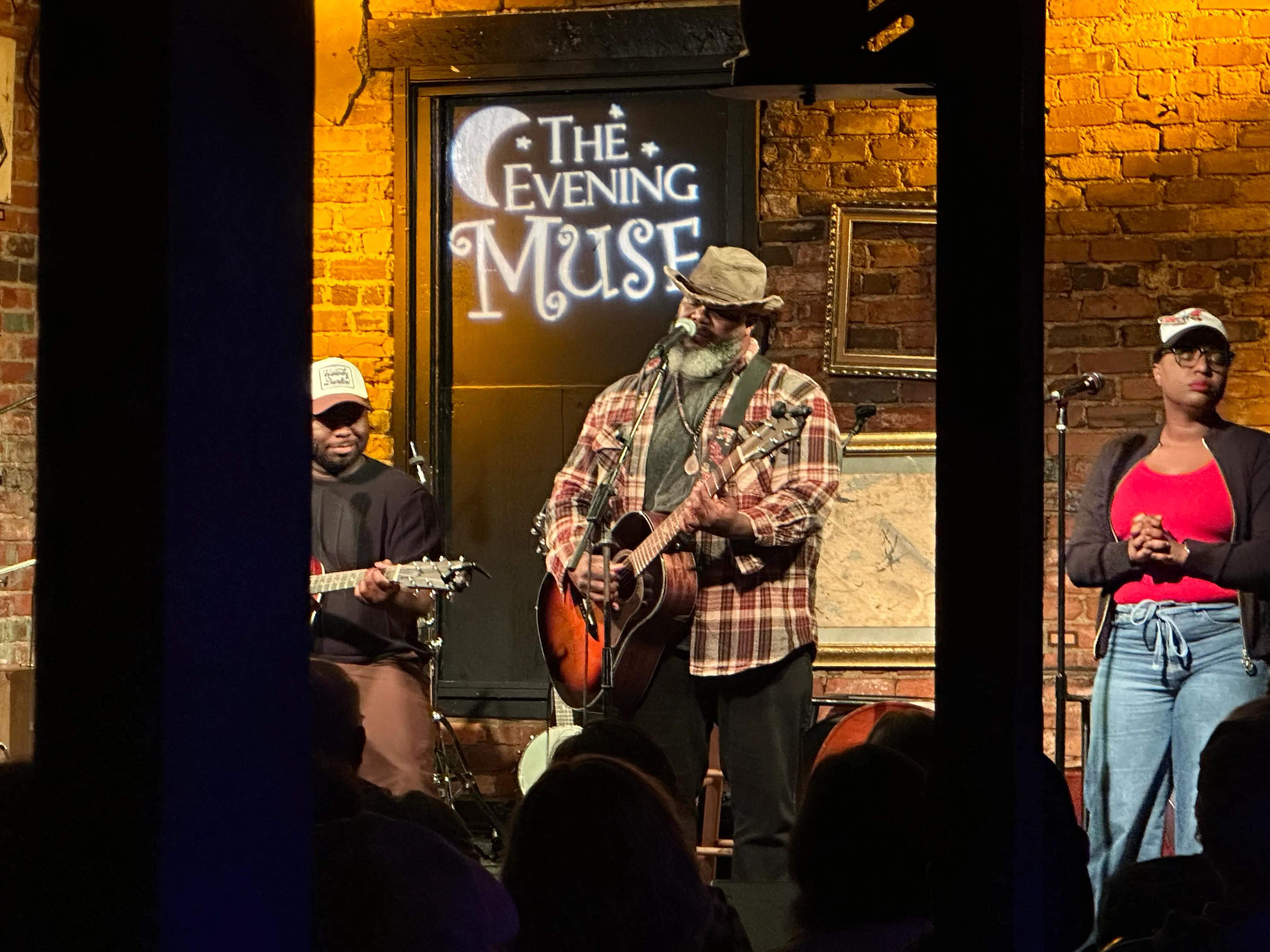
At The Evening Muse on Wednesday night, he moved through R&B, spiritual music, gospel, folk, soul and blues without making the transitions feel like changes in identity. The sound shifted, but the feeling did not. His voice, guitar and phrasing kept returning to the same center: a deep, searching soul that gave each tradition room without separating them from one another.
I have known Leon for more than 25 years. We first met at B.B. King’s in New Orleans, where he opened for Lisa McClendon. My memory of him reaches back to a musician already committed to his own path, and the Leon Timbo I saw at The Evening Muse carried that same steadiness. The settings have changed. The audience changes. The music continues to expand, but the core remains recognizable.
That continuity is part of Timbo’s strength. He is one of the most musically expansive artists I have encountered, but his range does not feel like a collection of disconnected skills. It feels lived in.
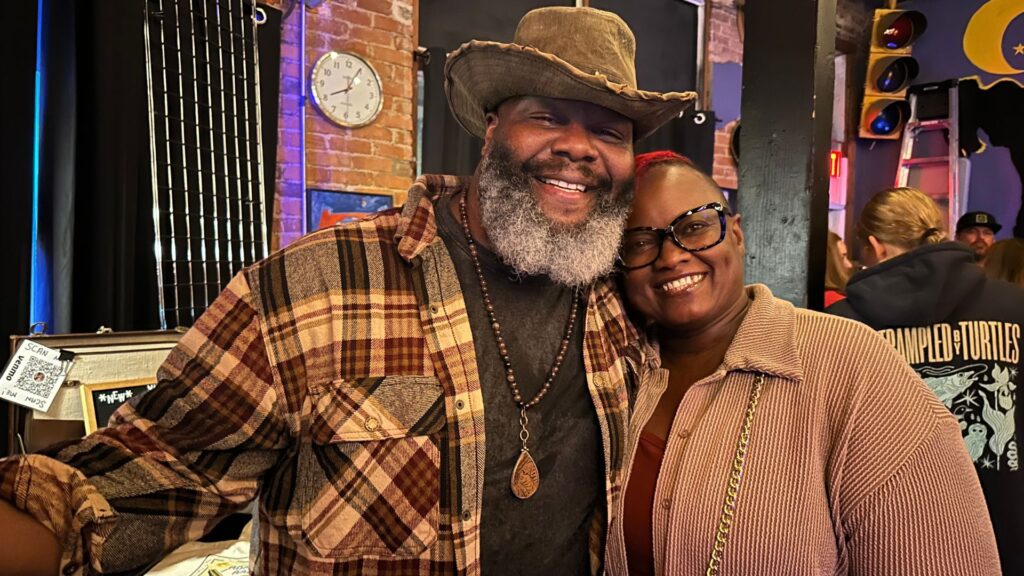
Leon Timbo during his opening set for Admiral Radio. Photo by JR Byrd.
A coherent language
Timbo’s music can be described through several familiar categories, but none of them is sufficient on its own. R&B accounts for the emotional directness. Gospel explains the lift in his delivery and the sense of testimony that can enter a performance. Folk gives him space for story and reflection. Soul holds the elements together.
The transitions worked because Timbo did not treat genre as a set of boundaries to cross for effect. He treated each tradition as part of the same musical inheritance. A vocal phrase could carry the intimacy of a soul ballad, then open into a spiritual register without becoming forced. A folk-rooted passage could retain its plainspoken character while gaining the warmth and authority of gospel.
That is close to what Timbo’s public profile calls “transparent soul.” On his official site, he describes his approach through country folk, bluegrass roots, gospel and what he calls “mother blues.” Billboard has also described the through line in his work as “transparent soul,” noting the combination of R&B, funk, gospel, reggae, rock and other influences.
The term fits because Timbo does not hide the sources of his music. He allows them to remain audible. The result is not a genre exercise. It is a performance shaped by memory, belief, movement and experience.
His voice provided the strongest point of connection. Timbo sang with authority, but not with the need to overwhelm the room. The power came from control: the ability to settle into a line, stretch its emotional weight and then let the band carry the next movement. His guitar work gave the set an acoustic foundation while leaving space for the musicians around him.
The Evening Muse is a fitting room for that kind of performance. Its exposed brick, warm amber lighting and close sightlines make small shifts in tone visible as well as audible. The audience is near enough to see a hand move across a guitar, to notice a change in posture and to recognize when a singer is leaning into a phrase rather than simply delivering it.
A room that listens
The crowd stayed engaged throughout Timbo’s set. From where I stood, the room responded not only when the music became more immediately rhythmic, but also during the quieter passages. The audience was enraptured as the performance developed, including people who may have been encountering Timbo for the first time.
That response was not based on a single style. It came from the continuity of the set. Timbo did not ask the audience to leave one tradition behind before entering another. He made the connections clear enough for the room to follow.
For a Black artist, that freedom is significant. Too often, the music industry sorts artists into narrow categories before listeners have a chance to hear the full range of their work. R&B, gospel, folk and soul are marketed as separate lanes even though Black musicians have always moved among them. The boundaries are often more useful to the business than to the music.
Charlotte needs more rooms where artists can be fully themselves rather than reduced to a single promotional description. Black arts in Charlotte have never existed in only one register. They have always carried church, neighborhood, family, migration, work, celebration and struggle into the same creative space. Timbo’s performance made that history sound present without turning it into an explanation.
That is also why this belongs in a wider conversation about Charlotte local news and culture. Music is part of how a city records its communities. It shows who is being heard, which traditions are being preserved, and whether local rooms are open to artists whose work resists easy labels.
The right opening act
 Timbo opened for Admiral Radio, the husband-and-wife folk/Americana duo of Coty Hoover and Becca Smith, who headlined the evening. Based in Columbia, South Carolina, Admiral Radio is known for close vocal harmonies, storytelling and acoustic instrumentation. The duo’s official biography describes a sound grounded in vocal interplay, finely picked instruments and songs drawn from everyday life.
That made the pairing sensible without requiring the artists to sound alike. Admiral Radio works within the folk and Americana tradition, while Timbo brings gospel, R&B and soul into a broader roots vocabulary. The shared ground is in the importance of the songwriter, the voice and the direct exchange between performer and audience.
The Evening Muse has been building that kind of exchange since it opened in April 2001 in Charlotte’s NoDa Arts District. According to the venue’s official history, it has presented thousands of independent acts from Charlotte, across the Carolinas and around the world. Its programming has included acoustic music, Americana, folk, blues, rock, jazz, hip-hop, reggae, R&B and related forms.
The venue’s songwriter-centered identity helped make Wednesday’s performance feel properly placed. This was not a room demanding that Timbo settle on one category. It was a room built for artists whose work begins with a song and expands from there.
For Charlotte community news, that kind of cultural space deserves attention beyond an event calendar. The health of a local music scene is measured not only by the number of shows it presents, but by whether its rooms allow musicians to develop complicated, personal identities in public.
Leon Timbo has been doing that for decades. At The Evening Muse, the many sounds did not compete. They belonged to one another. The soul was the structure.
Venue note
The Evening Muse opened in April 2001 and is located at 3227 N. Davidson Street, Charlotte, in the NoDa Arts District. The intimate room presents independent artists across acoustic, Americana, folk, blues, rock, jazz, hip-hop, reggae, R&B and related genres.